
Course: Master of Science in Psychology for Environmental Sustainability
Where: Católica Lisbon School of Business & Economics
Studying cognitive and behavioural aspects of consumer behaviour.
Why?
Before the course, I was already immersed in the world of consumer research - tracking emerging thinking, exploring behavioural frameworks, and applying what I could in my work as a strategist. However much of what I relied on in strategy - only scratches the surface of how people actually behave. I wanted to go deeper, beyond observation and into understanding.
So I have decided to pursue a Master of Science in Psychology.
What did I study?
I was particularly interested in how people construct meaning, form mental shortcuts, and act in ways that often diverge from how they see themselves.
I have chosen this course, as it leans into environmental behaviours, a great example of the Intention - Action gap.
The course included following modules:
Behavioural Science
Cognitive-affective Processes
Data Analysis and Research Methods
Statistics and Research Methods in Psychology
Strategic Communication, Risk and Crisis Communication
Environmental Sustainability
Psychology and Policy
The above modules have been incredibly useful, in understanding consumer behaviour within complex socio-political contexts.
How is it relevant to strategy?
Across categories like health, beauty, tech, food, finance, the same patterns emerge: people act in often unpredictable ways, driven by context, habits, emotions, and cognitive biases.
For a strategist, knowledge of the above mentioned disciplines, reframes the most important question from "what does this audience want?", to "what's the situation in which they make this decision, and what's actually driving them in that moment?"
That shift — from stated preference to situated context — changes the kind of insight a strategist can build, the creative territory we identify, and ultimately the work we make.
Examples of MSc projects
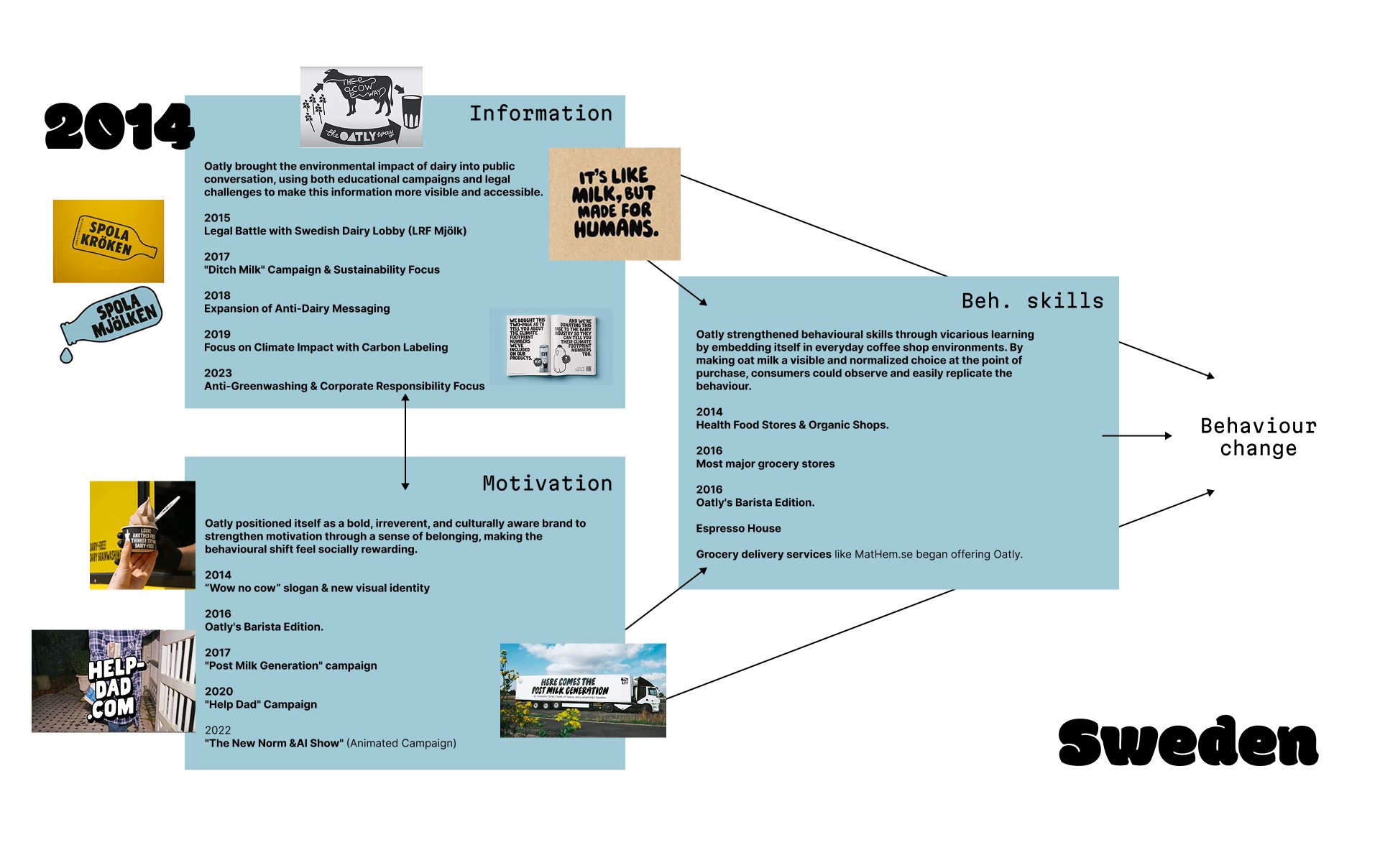
Can Oatly’s expansion strategy be codified?
Analysing Oatly’s expansion strategy through Information-Motivation-Behavioral Skills (IMB) Model. It was so far successful in a myriad of interventions and behavioural analysis and is extremely versatile.
The project sampled their market penetration strategies in Sweden (2014), US (2016) and China (2018).
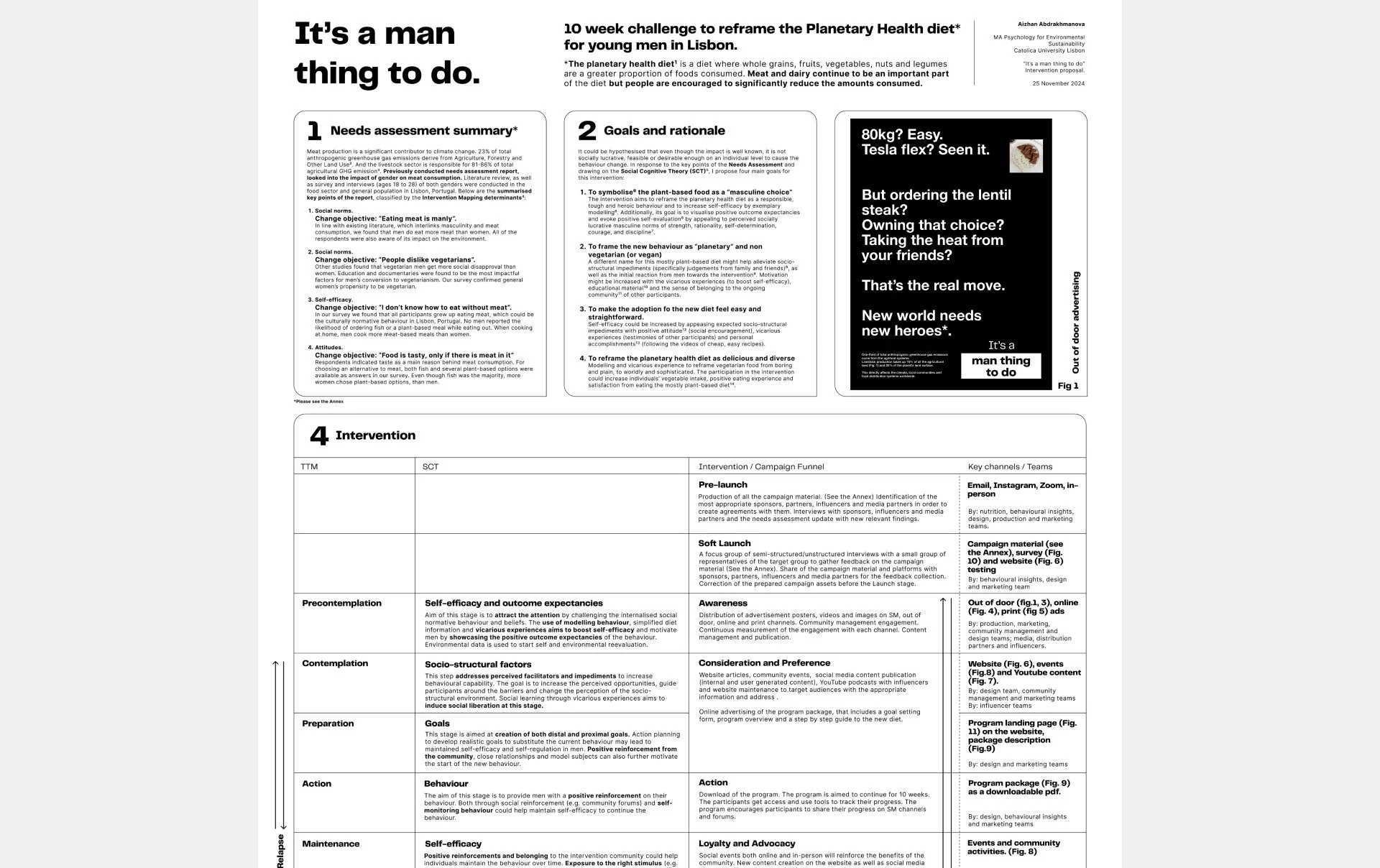
How can we start decoupling meat and masculinity?
The project included a qualitative research, needs assessment (with restaurant, supply chains and food production businesses) and literature review. The output was an intervention strategy that overlaps:
- Social Cognitive Theory
- The Transtheoretical Model (TTM)
- And a classic Marketing Campaign funnel
to propose a Lisbon-targeted campaign that reframes the meaning of meat in our age.
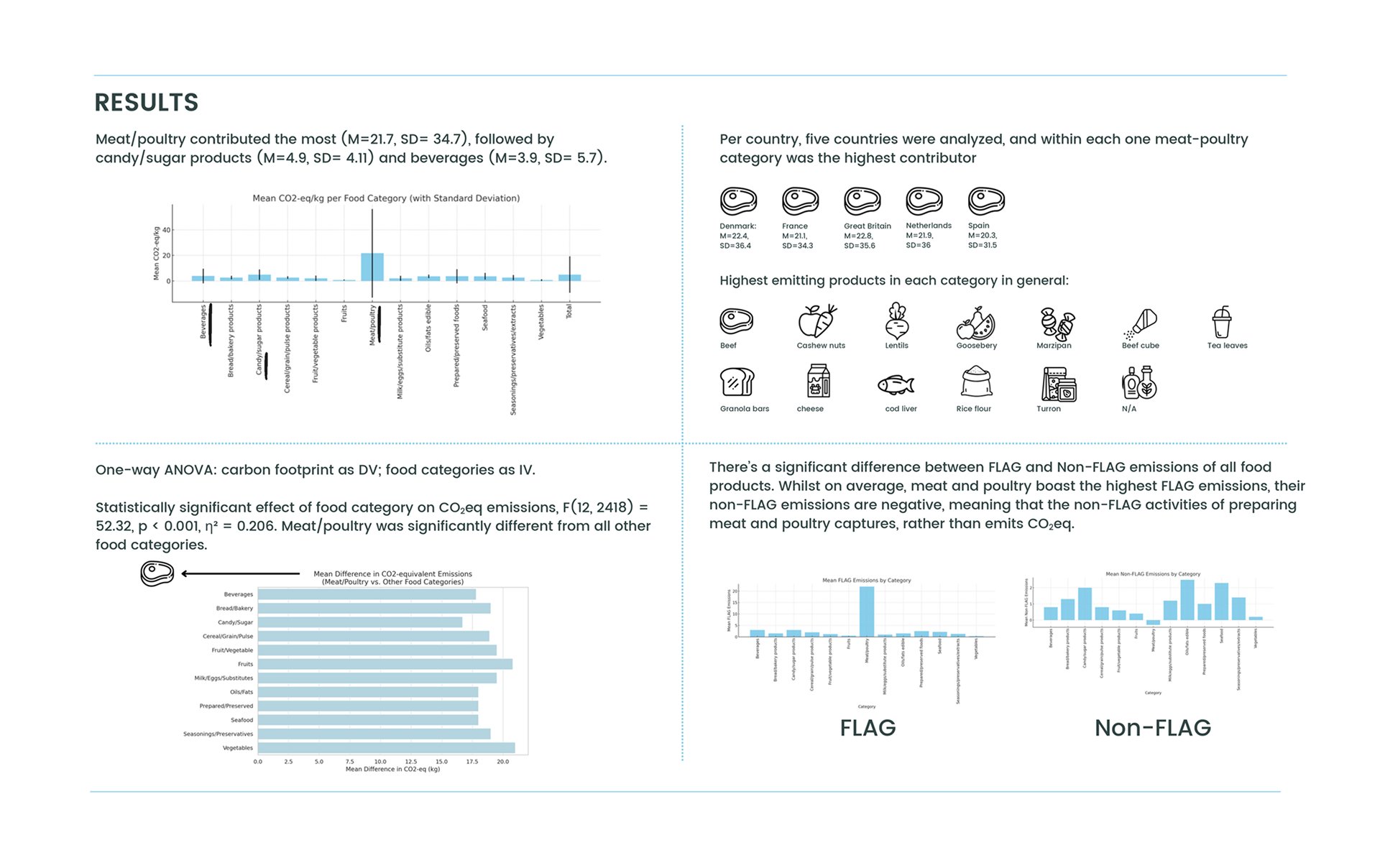
What foods contribute the most to GHG Emissions?
This paper aimed to examine the carbon footprint of various food categories across five European countries (Denmark, Great Britain, Spain, France, and the Netherlands) to understand the environmental impact of food products.
The project used descriptive statistics and ANOVA to analyse The Big Climate Database.